
Deciding how to distribute your skincare spending often feels like navigating a maze of conflicting marketing claims. A luxury cream might boast rare botanical extracts in ornate packaging, while a drugstore cleanser sits quietly on a bottom shelf for under ten dollars. When working with a defined monthly or quarterly budget, the most effective approach is not splitting your money evenly across every bottle. Instead, a balanced routine relies on formulation mechanics: understanding what each product actually does, how long it stays in contact with your skin, and where chemical complexity genuinely justifies a higher price point.
The Formulation Mechanics: Contact Time and Active Delivery
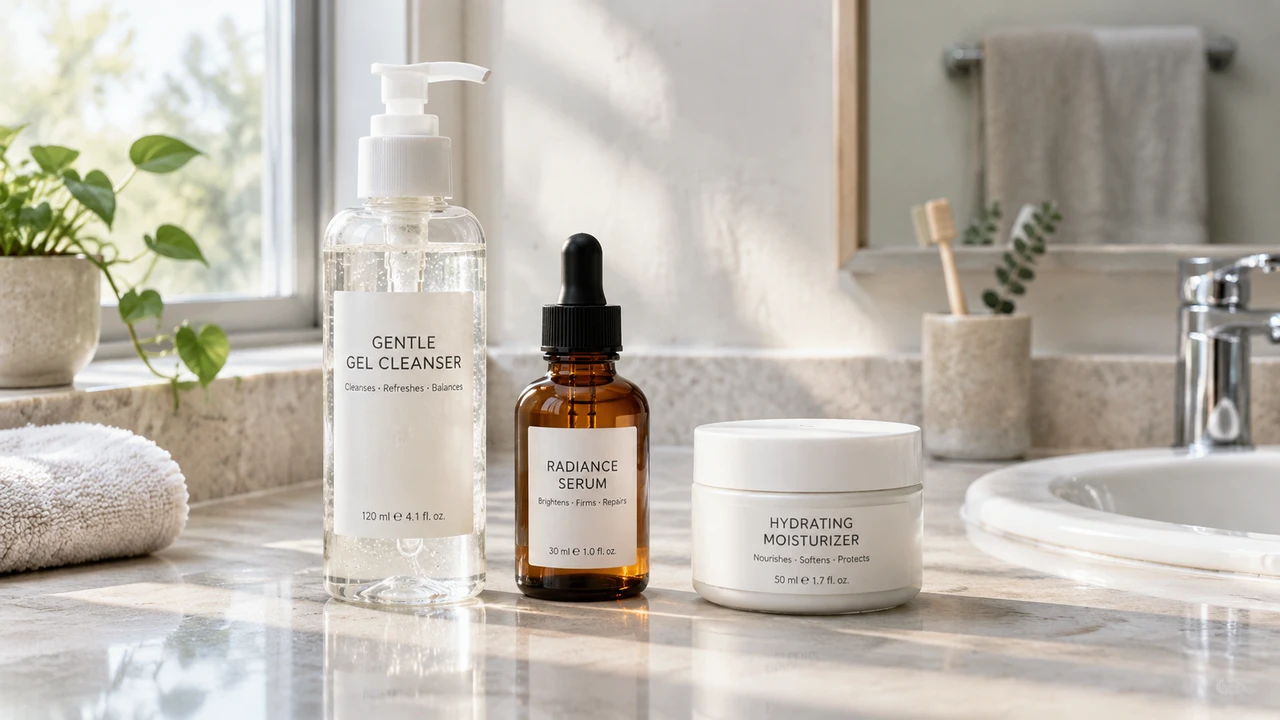
To make practical spending decisions, it helps to divide topical products into two functional categories: rinse-off cleansers and leave-on treatments.
A facial cleanser remains on your face for roughly thirty to sixty seconds before being rinsed down the drain. Its primary physical role is surfactant-driven: binding to excess sebum, surface debris, sunscreen, and makeup so they can be removed with water. Because its contact time is brief, expensive active ingredients added to wash formulas—such as peptides, botanical infusions, or rare antioxidants—rarely have sufficient contact time to deliver measurable benefits beyond basic cleansing.
In contrast, moisturizers and targeted serums remain on the skin for hours. These leave-on vehicles interact continuously with the stratum corneum (the outermost layer of the skin). Serums, in particular, rely on precise pH levels, stabilized carrier molecules, and active ingredient percentages to remain effective without degrading. Consequently, formulation science matters far more in products designed to linger on the skin than in those designed to wash away.
Cleansers: The Ideal Category to Save
For most consumers, the cleanser represents the safest place to minimize spending. A functional, high-performing cleanser needs only to remove impurities while respecting the skin's natural moisture barrier.
When shopping for an affordable daily cleanser, focus on formulation type rather than brand prestige:
- Surfactant Gentleness: Look for non-stripping surfactants (such as coco-betaine or sodium cocoyl isethionate) rather than harsh traditional soap bases, which can leave skin feeling tight.
- pH Balance: Formulations close to the skin's natural acidic mantle (roughly pH 4.5 to 5.5) help clean without excessive disruption.
- Texture Compatibility: Foaming gel textures generally suit normal to oily skin, while lotion or cream cleansers support drier or barrier-compromised skin types.
Paying forty or fifty dollars for a basic face wash often buys heavier glass packaging, sophisticated fragrances, and prestige branding rather than superior cleansing mechanics. Inexpensive drugstore formulas routinely meet all the physiological requirements of effective facial cleansing for under fifteen dollars.
Moisturizers: Moderate Spending for Barrier Support
Moisturizers serve to hydrate the upper epidermal layers and prevent transepidermal water loss. A standard daily moisturizer accomplishes this using a balance of three classic ingredient families: humectants (like glycerin and hyaluronic acid), emollients (such as squalane or fatty alcohols), and occlusives (like petrolatum, dimethicone, or plant butters).
Because these foundational ingredients are widely available and well-understood by cosmetic chemists, basic barrier repair does not demand a premium price. A large tube of standard ceramide-and-glycerin cream provides reliable hydration for a modest cost per ounce.
However, price differences in moisturizers become relevant when texture and cosmetic elegance dictate daily adherence:
- Under-Makeup Performance: Cheaper occlusives can feel heavy or pill under cosmetics. Lighter gel-creams formulated with silicone polymers or lightweight esters may justify a moderate step up in budget for oily or daytime wear.
- Packaging Considerations: Jars expose formulations to air and light, whereas airless pump bottles protect the stability of sensitive secondary ingredients, though they slightly increase manufacturing costs.
For most routines, a mid-range or budget moisturizer delivers solid barrier protection. Splurging on this step is only necessary if your skin is particularly reactive to common emulsifiers or requires a highly specialized finish for daily comfort.
Serums: Where Formulation Complexity Justifies the Investment
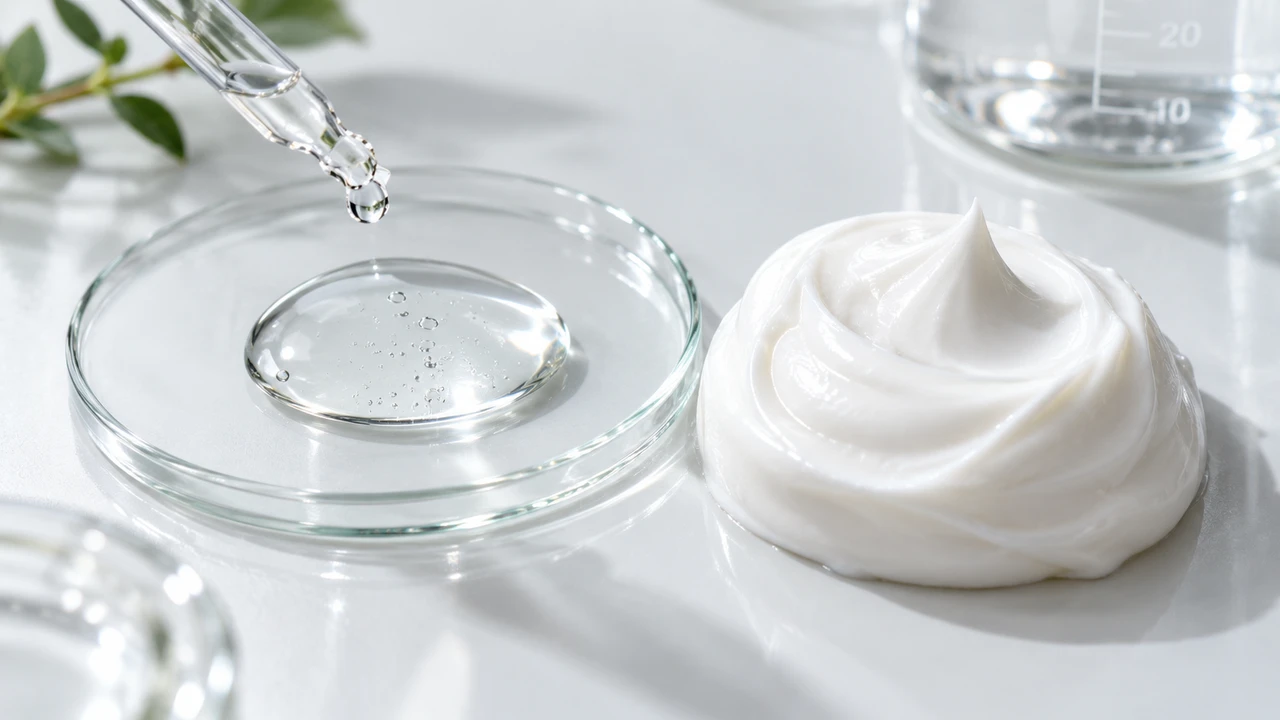
If you choose to allocate a significant portion of your skincare budget to a single product, targeted serums are the logical candidate. Serums feature lighter textures designed to deliver concentrated functional ingredients directly to the surface of the skin.
However, not all serums require a splurge. The decision to invest heavily depends entirely on the chemical stability and formulation demands of the specific active ingredient:
| Active Type | Formulation Challenge | Budget Allocation Recommendation |
|---|---|---|
| L-Ascorbic Acid (Vitamin C) | Highly unstable; oxidizes rapidly in water, requiring precise pH and stabilizing co-antioxidants. | Splurge: Specialized delivery systems, airtight packaging, and proven stabilization formulas are worth the higher cost. |
| Retinoids (Retinal/Encapsulated Retinol) | Prone to degradation; potent active requiring buffered or encapsulated release to minimize irritation. | Moderate to Splurge: Advanced stabilization and tolerability vehicles justify a higher spend over raw, unbuffered retinol. |
| Niacinamide (Vitamin B3) | Highly stable; water-soluble and resilient to heat, light, and pH shifts. | Save: Inexpensive, single-ingredient serums perform just as reliably as high-end alternatives. |
| Hyaluronic Acid | A standard humectant; readily available and chemically straightforward to blend. | Save: Basic formulations hydrate effectively without proprietary delivery technologies. |
Stable, resilient ingredients like niacinamide or straightforward humectants provide reliable cosmetic results at lower price points. Conversely, delicate compounds such as pure L-ascorbic acid or multi-peptide complexes require rigorous stabilization testing, specialized dark or airless packaging, and sophisticated emulsifiers. In these cases, paying more often directly correlates with a product that remains active throughout its shelf life rather than oxidizing into an ineffective solution.
Practical Budget Frameworks
To help visualize how to divide your funds, consider these proportional spending allocations based on your cosmetic goals:
The Essential Routine (Maintenance and Barrier Care)
If your goal is maintaining healthy, comfortable skin without addressing specific concerns like stubborn discoloration or visible loss of firmness:
- Cleanser: 25% of total budget
- Moisturizer: 40% of total budget
- Sunscreen / Basic Hydrator: 35% of total budget
- Serum necessity: Optional. A simple humectant or barrier serum can be added affordably if desired.
The Targeted Treatment Routine (Active-Focused)
If you are actively addressing uneven texture, dullness, or fine lines using specialized ingredients:
- Cleanser: 10–15% of total budget (reliable, basic gentle formula)
- Moisturizer: 20–25% of total budget (simple, supportive barrier cream)
- Targeted Serum: 45–55% of total budget (stabilized active treatment)
- Sunscreen / Daily Care: Remaining budget
Cosmetics have inherent physiological limits; no price point can deliver overnight structural transformation. By prioritizing your spending on stable, leave-on active vehicles while relying on straightforward drugstore formulations for daily cleansing and basic moisture, you can establish a dependable, high-performing routine that respects your personal finances.
Leave a Reply