
Buying a refrigerator starts with kitchen boundaries rather than showroom aesthetics. A model can boast the precise shelving options and door finish you want, but if it blocks an entry walkway or leaves your household short on fresh food storage during peak cooking days, it becomes a daily frustration. Selecting the right model requires matching physical dimensions to your kitchen layout, calculating the internal volume needed for your household size, and choosing a freezer orientation that complements how you prepare meals.
Measuring the Physical Space and Clearance
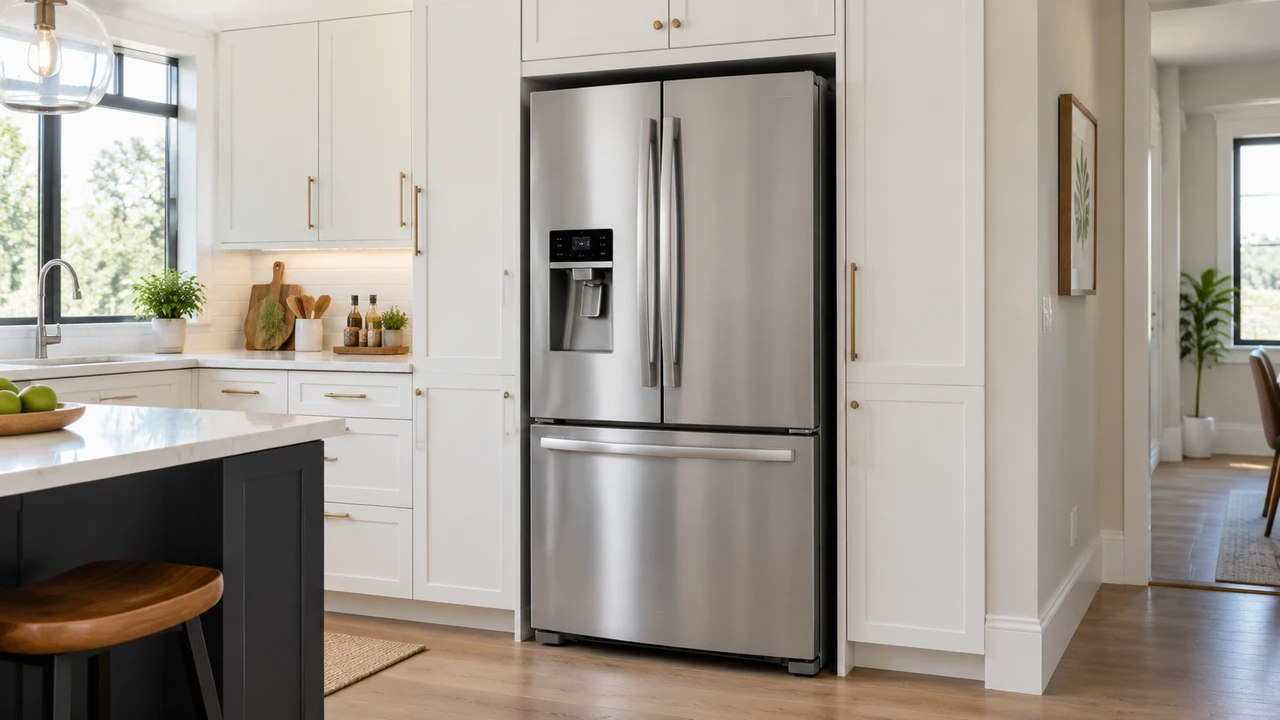
Before browsing layouts or exterior finishes, take precise measurements of the installation cavity. An accurate fit involves more than matching the height, width, and depth of the refrigerator to the opening between your counters and cabinets.
- Exterior Dimensions: Measure the height from the floor to the bottom of any overhead cabinets, the width between flanking cabinetry or walls, and the depth from the back wall to the front edge of the counters. Check measurements at both the top and bottom of the opening, as walls and floors are rarely perfectly square.
- Ventilation Clearances: Refrigerators need continuous airflow to release heat from the compressor and condenser coils. Manufacturer installation manuals generally specify leaving at least one inch of clearance above the unit, one to two inches behind it, and a fraction of an inch to a half-inch on the sides. Restricting this space forces the cooling system to work harder, accelerating mechanical wear and driving up power consumption.
- Door Swing and Hinge Clearance: Account for the space required to swing doors open past a 90-degree angle so you can slide out interior crisper drawers. Note nearby walls, islands, or opposing counters that might obstruct door travel or block walking paths when doors are open.
- Delivery Path: Measure the narrowest points along the route from the delivery truck to the kitchen, including entry doorways, hallway turns, and stairwells. Many units offer removable doors to reduce transit depth, but measuring ahead prevents delivery-day refusals.
Calculating Usable Capacity for Your Household
Advertised refrigerator capacity is expressed in cubic feet, representing the total gross volume of both the fresh food and freezer compartments. However, internal accessories—such as light housings, air ducts, ice-maker assemblies, and shelving brackets—reduce the actual usable storage space.
When asking yourself what refrigerator size do I need, baseline household size and food-procurement routines provide the most reliable benchmark:
| Household Profile | Recommended Total Capacity | Shopping & Cooking Habits |
|---|---|---|
| 1 to 2 People | 12 to 16 cu. ft. | Frequent fresh market trips; low bulk storage demands |
| 3 to 4 People | 18 to 22 cu. ft. | Balanced weekly grocery runs; standard meal prep |
| 5+ People / Bulk Buyers | 22 to 28+ cu. ft. | Large grocery batches; high frozen meat and bulk item storage |
While larger refrigerators offer flexible storage, buying significantly more capacity than your household utilizes wastes energy cooling empty air. Conversely, packing an undersized unit to capacity restricts internal air circulation, leading to inconsistent temperatures and faster food spoilage.
Evaluating Freezer Layouts
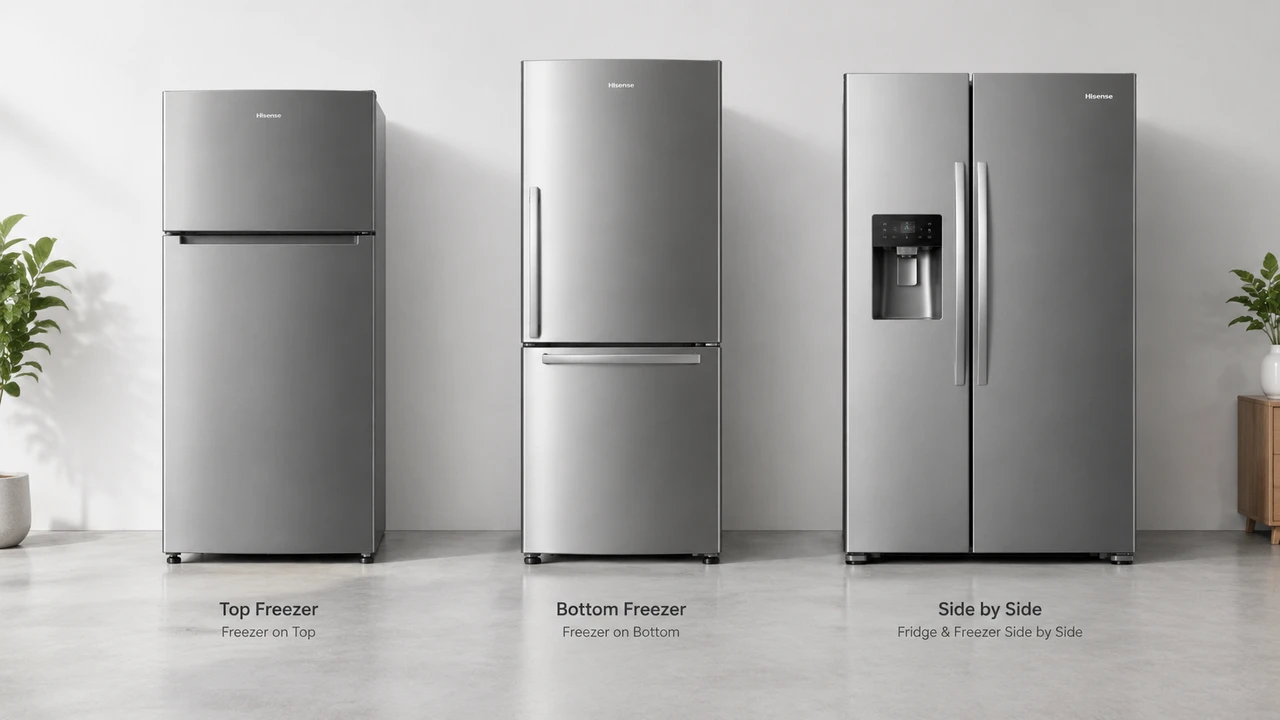
The placement of the freezer compartment directly dictates everyday ergonomic comfort, shelf organization, and clearance requirements.
Top-Freezer Refrigerators
Top-freezer models position the freezer at eye level and the fresh food compartment below.
- Practical Advantages: These models remain the most budget-friendly category in initial purchase price and replacement parts. They typically offer wide, unobstructed door bins and shelves that accommodate wide casserole dishes, sheet pans, and party platters.
- Compromises: The most frequently used items—produce crispers, dairy bins, and everyday beverages—sit at waist and knee level, requiring frequent bending. Interior organization tends to be basic, with limited bin customization.
Bottom-Freezer and French-Door Refrigerators
Bottom-freezer configurations place the fresh food compartment at torso and eye level, using either a swing-out door or a pull-out drawer for the lower freezer. French-door models split the upper refrigeration section into two doors over a pull-out bottom freezer.
- Practical Advantages: Everyday meal prep is ergonomically convenient, as fresh ingredients remain within arm's reach without bending. The wide interior shelves span the full width of the cabinet, accommodating large items effortlessly.
- Compromises: Frozen items are stored in deep baskets, requiring you to stack packages vertically and sort through layers to locate items. These units carry a higher purchase price and require adequate clearance in front of the unit to fully extend the bottom pull-out drawer.
Side-by-Side Refrigerators
Side-by-side configurations divide the appliance vertically, placing the freezer on the left and the fresh food compartment on the right.
- Practical Advantages: The vertical split keeps both fresh and frozen items accessible at eye level. Because each door is roughly half the width of a full single door, side-by-side models require significantly less door-swing clearance, making them well-suited for narrow galley kitchens or kitchens with close center islands.
- Compromises: The narrower compartment widths make it difficult to store oversized items, such as large frozen pizza boxes, sheet cakes, or wide serving trays. Vertical shelving also requires disciplined organization to prevent items in the back from being overlooked.
Convenience Features vs. Operational Trade-Offs
Upgraded features can streamline meal prep, but they often impose measurable penalties on interior usable space and long-term operating costs.
Through-the-door water dispensers and automatic ice makers are among the most requested additions, yet they introduce several trade-offs:
- Usable Capacity Loss: Ice-making mechanisms and door-mounted chutes consume between one and two cubic feet of door and shelf space in the fresh food or freezer compartments.
- Energy Consumption: In a side-by-side refrigerator, through-the-door dispensing configurations typically consume slightly more energy than comparable units without door dispensers, as ice routing requires dedicated door insulation breaks and active heating loops to prevent condensation.
- Maintenance and Plumbing: These units require an active cold-water line hookup, regular water filter replacements every six months, and periodic line flushes to prevent mineral buildup and leaks.
If maximum usable storage and minimum maintenance are your priorities, a model with an internal water dispenser or a simple, bin-based freezer ice maker preserves valuable door capacity while reducing mechanical failure points.
Energy Efficiency and Ownership Costs
Refrigerators operate continuously, making energy consumption an important part of your overall purchase decision. Checking documented efficiency metrics helps you evaluate ownership expenses over the appliance's typical 10-to-15-year service life.
An ENERGY STAR refrigerator certification indicates that a model meets strict energy efficiency guidelines set by the U.S. Environmental Protection Agency and Department of Energy, using advanced insulation, improved compressor designs, and optimized defrost cycles to consume less power than standard baseline units. When comparing models:
- Examine the Yellow EnergyGuide Label: Check the estimated yearly electricity consumption listed in kilowatt-hours (kWh/year). Multiply this figure by your local utility rate to calculate estimated annual operating costs.
- Compare Layout Efficiency: Historically, top-freezer configurations consume the least power per cubic foot of usable space because the compressor is positioned at the base, away from the freezer compartment. French-door and side-by-side models consume more power due to dual cooling loops, dispenser options, and larger overall cabinet volumes.
- Verify Rebate Opportunities: Many municipal electric utilities and state programs offer instant discounts or mail-in rebates for replacing older units with certified ENERGY STAR models.
Pre-Purchase Verification Checklist
Before placing an order or finalizing delivery, verify the following details against the retailer's and manufacturer's documented specifications:
- Measure Door Swings and Counter Depth: Confirm whether standard depth (which protrudes past 24-inch base cabinets) or counter-depth styling is required for your walkway clearances.
- Confirm Water Line Connections: If selecting an ice maker or dispenser, check that a functional water line and shut-off valve exist within reach of the unit.
- Review Electrical Requirements: Ensure a standard, grounded 115-volt, 60 Hz outlet is available on a dedicated 15- or 20-amp circuit.
- Verify Current Retail Terms: Merchant pages, local delivery fees, haul-away policies for your old appliance, and regional utility rebate amounts can vary widely. Always review published retailer terms and spec sheets directly before purchase to confirm model availability and dimensional guarantees.
Leave a Reply