
Choosing an everyday wallet starts with a straightforward inventory: what you physically carry each morning determines the format you need. While it is tempting to pick an accessory based purely on color or branding, functional frustration almost always traces back to a mismatch between card capacity, cash requirements, and pocket size. Taking stock of your daily loadout before shopping ensures you purchase a silhouette that stays comfortable and organized over years of routine carry.
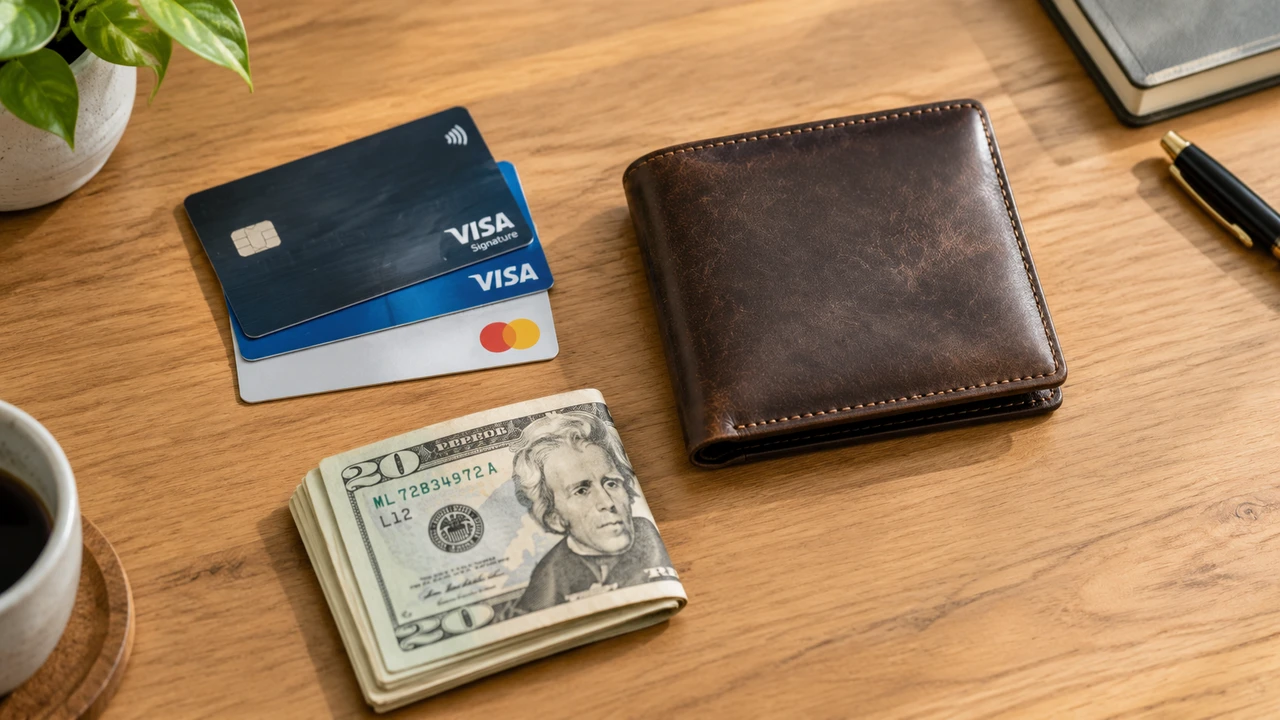
Start with Your Daily Carry Profile
Most people carry fewer items than they assume. Emptying your current wallet onto a flat surface helps separate daily necessities from cards that can remain at home or live in digital form.
- Primary Essentials (3 to 5 cards): Typically includes a primary payment card, a driver's license or state ID, health insurance documentation, and a primary transit or building access pass.
- Secondary Cards (3 to 5 cards): Backup payment cards, membership credentials, secondary identification, or business expense cards used several times a week.
- Occasional Items: Loyalty cards, gift cards, emergency contact cards, and paper receipts that accumulate during the day.
- Paper Currency: Determine whether you require completely flat, unfolded bill storage or whether carrying two to four bills folded once or twice fits your purchasing habits.
If your realistic count sits at three to six cards with rare cash needs, a compact cardholder or money-clip profile will handle your load without excess bulk. If your routine demands six to ten cards alongside multiple unfolded bills, traditional multi-panel configurations provide necessary dedicated storage.
Comparing Wallet Formats
The fundamental difference between wallet designs comes down to thickness, pocket footprint, and organizational access.
| Wallet Format | Typical Empty Thickness | Realistic Card Range | Cash Handling | Best Pocket Placement |
|---|---|---|---|---|
| Slim Cardholder | 0.2 to 0.4 inches | 3 to 6 cards | Folded bills only (central pocket or band) | Front pocket, shirt pocket |
| Bifold | 0.5 to 0.75 inches | 6 to 10+ cards | Dedicated full-length compartment (unfolded) | Back pocket, front pocket, jacket |
| Trifold | 0.75 to 1.0+ inches | 8 to 12+ cards | Full-length compartment, extra fold | Back pocket, bag |
| Long / Coat Wallet | 0.5 to 0.7 inches | 10 to 16+ cards | Flat storage for currency, receipts, checks | Coat interior pocket, briefcase, bag |
Slim Wallets and Cardholders
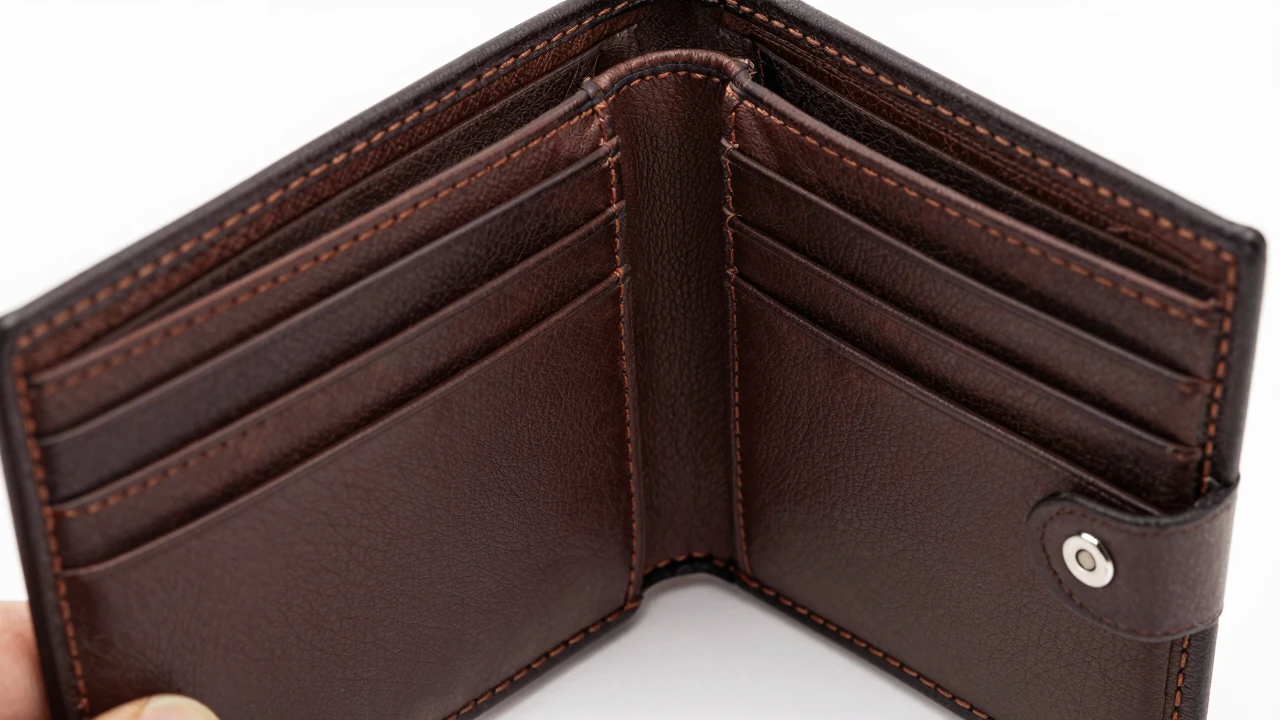
A slim wallet focuses strictly on essential access. These designs typically feature staggered external card slots and a single internal slip compartment. Stacking multiple plastic cards into a single unlined leather or technical textile sleeve can cause stretching, meaning a slot sized for two cards may become loose if reduced back to one. Slim profiles require folding paper currency twice to fit inside internal pockets, which quickly creates localized thickness if more than a few bills are stored.
Traditional Bifolds and Trifolds
A bifold balances widespread card capacity with flat cash organization. Standard paper currency (such as US banknotes measuring approximately 2.6 inches by 6.1 inches) fits completely flat in dedicated bill sections, eliminating folded bulk. However, every structural fold and interior divider adds material layers. When loaded with six plastic cards and several banknotes, an empty 0.5-inch bifold easily expands to 0.9 inches or more. Trifolds introduce a third folding section, maximizing card slots at the cost of significant resting depth.
Checking Dimensions and Pocket Fit
Product listings specify dimensions based on flat, empty goods. To avoid fit issues, check both listed measurements and how the internal geometry handles actual items:
- Stated Width and Height: A standard payment card measures 3.37 inches wide by 2.125 inches tall. Ensure listed card slot orientations offer adequate depth so card tops remain accessible without slipping beneath structural stitching.
- Bill Compartment Clearance: For full-length bill storage without folding, verify that the open interior length measures at least 7 inches to comfortably clear paper currency edges.
- Front Pocket vs. Back Pocket: Front-pocket carry demands a height under 4.25 inches and a loaded thickness ideally under 0.6 inches to avoid impeding movement when seated. Back-pocket models tolerate slightly wider profiles, but thick wallets create uneven posture when sat upon for extended periods.
Closures and Hardware Trade-Offs
How a wallet closes influences internal retention and exterior silhouette:
- Open / Frameless: Common in classic bifolds and slim card sleeves. Offers the lowest possible profile with no snagging components, though loose receipts or cards can slip out if compartments stretch.
- Zipper Closures: Perimeter zippers provide complete security for loose currency, smaller receipts, and cards. However, metal or nylon zipper tracks add permanent perimeter thickness and require precise sizing to prevent bills from catching in the teeth.
- Snap Fasteners: Metal snap buttons secure heavy card loads reliably, but the physical male-female hardware creates a localized pressure point that indents leather and adjacent plastic cards over time.
- Elastic Bands or Metal Money Clips: Often found on ultra-minimalist designs. They reduce material layers but expose cash and cards to direct friction against pocket fabric.
Materials, Construction, and Upkeep
A wallet's longevity relies heavily on its raw material structure and how it is maintained.
Full-grain and top-grain leathers adapt to pocket geometry over time and break in naturally, but they can permanently stretch if overloaded with excess cards. To keep leather supple and prevent edge cracking, wipe it periodically with a slightly damp cloth to remove pocket dust, and apply a neutral wax- or oil-based conditioner once or twice a year. Keep leather away from direct radiators or hair dryers if it gets wet, allowing it to air-dry slowly to prevent stiffness.
Technical synthetic textiles, such as high-density nylon or polyester weaves, provide high abrasion resistance and minimal initial material thickness. Synthetics do not stretch, meaning slot capacities are rigid and will not expand to accommodate an extra card. Cleaning synthetics typically requires only mild soap and warm water spot-treatment.
By auditing your exact card and cash inventory first, evaluating empty versus loaded dimensions, and selecting a closure suited to your carry location, you can choose a wallet that remains comfortable, accessible, and durable for everyday use.