
A small bedroom rarely fails for lack of storage; it fails because the storage someone bought was the wrong shape. The gap under the bed is usually the largest usable volume in the room, yet a deep tote that fits a closet shelf can be an inch too tall to clear a platform frame, and a soft bin that slides in easily can bury the shoes you need on a Tuesday morning. The two dominant options — rigid clear plastic totes, often on wheels, and zippered fabric bins — solve different problems. Choosing between them is less about which material is "better" and more about measuring your clearance, deciding how often you need to reach the contents, and matching the box to what goes inside.
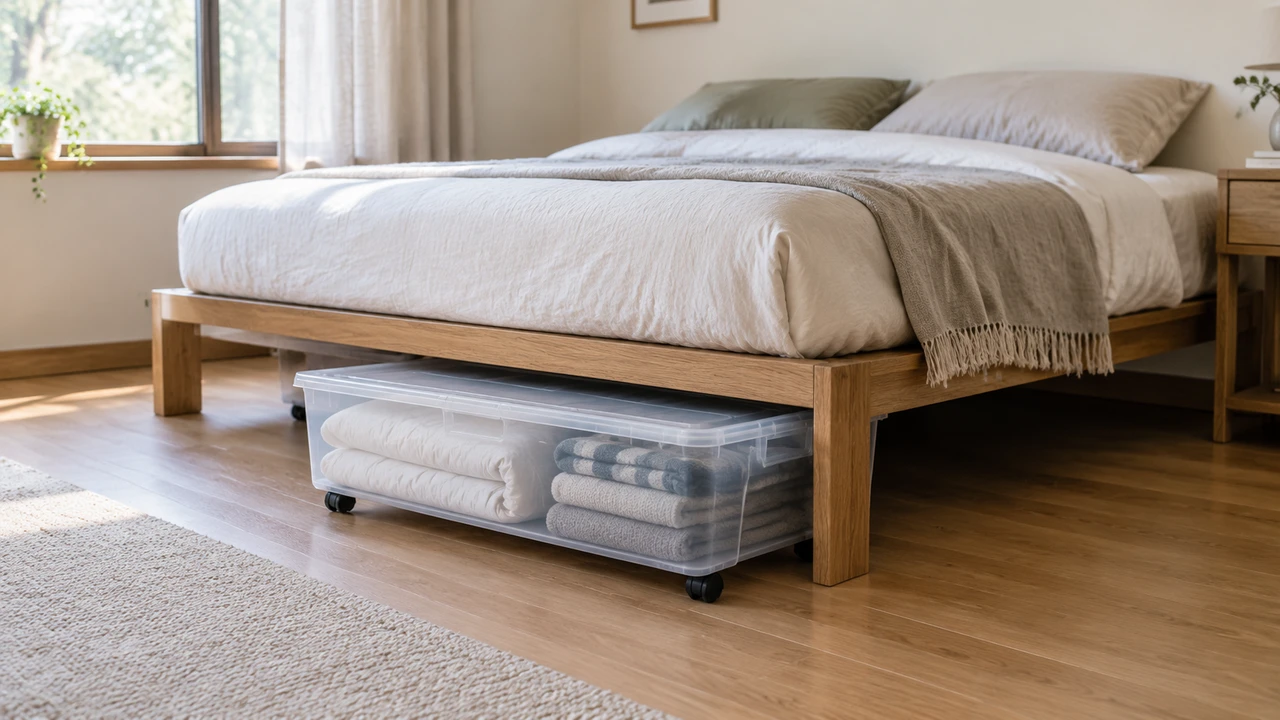
Measure three numbers before you shop
Under-bed buying goes wrong most often at the tape-measure stage, not the checkout stage. Take these three measurements with the bed in its final position, on the actual floor surface it sits on.
1. Clearance height. Measure from the floor to the lowest point of the bed — usually the side rail, but check center support legs and the footboard too. Many standard bed frames with a box spring leave roughly 6 to 7 inches, while low platform frames often leave less; measure at three points along each side, because floors and frames are rarely perfectly level. If you have thick carpet or a rug with deep pile, measure on top of it. Then subtract at least half an inch of slack: a tote that scrapes the rail every time you pull it out will stop being used.
2. Pull-out depth. A bin needs somewhere to go. For a rolling tote, add about 12 inches of clear floor beyond the bin's length so it can come out far enough to open and reach the back. For a lidless or removable-lid bin, that number can be smaller. For a hinged lid, check whether the lid swings upward — if it does, you need vertical room above the bin, which is often the exact space the bed frame is occupying.
3. Bin footprint versus the gap. Leave about 2 inches of finger room on the sides if the bin has handles only at the ends. If you plan to run two bins side by side, confirm the combined width against the space between the legs, not against the mattress width.
Once you have those numbers, "under bed tote dimensions" becomes a filter rather than a guess. A typical low-profile bin runs in the 6- to 7-inch height range, with longer versions running 30 to 40 inches or more — but the listed dimensions come from manufacturers and can change by model year, so confirm them on the product page, where current pricing and offers also live.
Material trade-offs at a glance
| Clear plastic totes | Zippered fabric bins | |
|---|---|---|
| Shape | Rigid; holds form empty or full | Soft; collapses or bulges with contents |
| Dust and pest sealing | Better; lids and latches limit dust, dirt, and pests | Limited; fabric is generally not airtight |
| Moisture | Wipes clean; some lids are gasketed for a tighter seal | Absorbs and holds dampness more readily |
| Visibility | Contents visible through the sides | Opaque or semi-opaque |
| Empty storage | Bulky; stacks but takes space | Folds flat |
| Cleaning | Damp cloth wipe | Vacuum, spot clean, air dry |
| Wear pattern | Can crack or scratch over years of use | Edges can fray and seams can wear |
| Typical best use | Seasonal bedding, wool, shoes, anything stored for months | Everyday items, soft goods, quick access |
That table is editorial judgment built from how these products are constructed and how manufacturers describe them — not a lab test. The right column isn't a downgrade; it's a different set of priorities.
Clear plastic totes: when sealing and shape matter
Clear plastic wins on protection. Rigid walls keep their shape whether the bin is full or empty, so stacked bins in a closet off-season don't slump, and the contents don't compress into a shapeless mass. Clear sides let you confirm what's inside without pulling anything out, which matters in a small bedroom where you may be reaching under the bed from an awkward angle. Plastic also wipes clean, and the styles with latching or gasketed lids are the ones designed to resist dust, dirt, and pests — useful for off-season wool, blankets that sit for six months, and shoes that come in wet.
What to check on a plastic tote
- Lid style. A fully removable lid needs vertical room to lift; a hinged lid needs clearance above the hinge line. If your bed sits low, a removable lid pulled forward is often the only workable option.
- Wheels versus handles. Casters help on hard floors and short-pile carpet, but they add height and need a smooth run. On thick carpet, a rigid bin with cut-in handles may slide better than small wheels that dig in.
- Latch quality. Two latches at the ends hold a lid more evenly than a single center clip.
- Wall thickness at the rim. Thin rims flex and crack first; a reinforced top edge is where a tote earns its lifespan.
- Interior height. Listed exterior height includes the lid and any wheel housing. Check the usable interior depth against what you're storing — a stack of queen bedding fills a 7-inch bin quickly.
Fabric bins: when flexibility and everyday access win
Fabric bins earn their place when the contents are soft, the clearance is tight, and the bin gets opened several times a week. Flexible sides expand and compress, so a fabric bin can hold more than its nominal dimensions suggest, and soft edges are gentler on both furniture legs and shins. The zippered, breathable styles are the ones that make sense for everyday shoes and linens: you can unzip the top, reach in, and zip it closed without dragging the whole bin out, which is exactly the scenario a low bed frame creates. Soft bins also fold flat when empty, an advantage in a small bedroom storage plan that has to shift with the seasons.
The trade-off is protection. Fabric is generally not airtight, and the same breathability that keeps musty smells down also lets dust and moisture reach the contents. Edges and seams are the first places to show wear, especially on bins that get dragged across carpet. If the items inside need protection from damp or pests, fabric is the weaker choice.
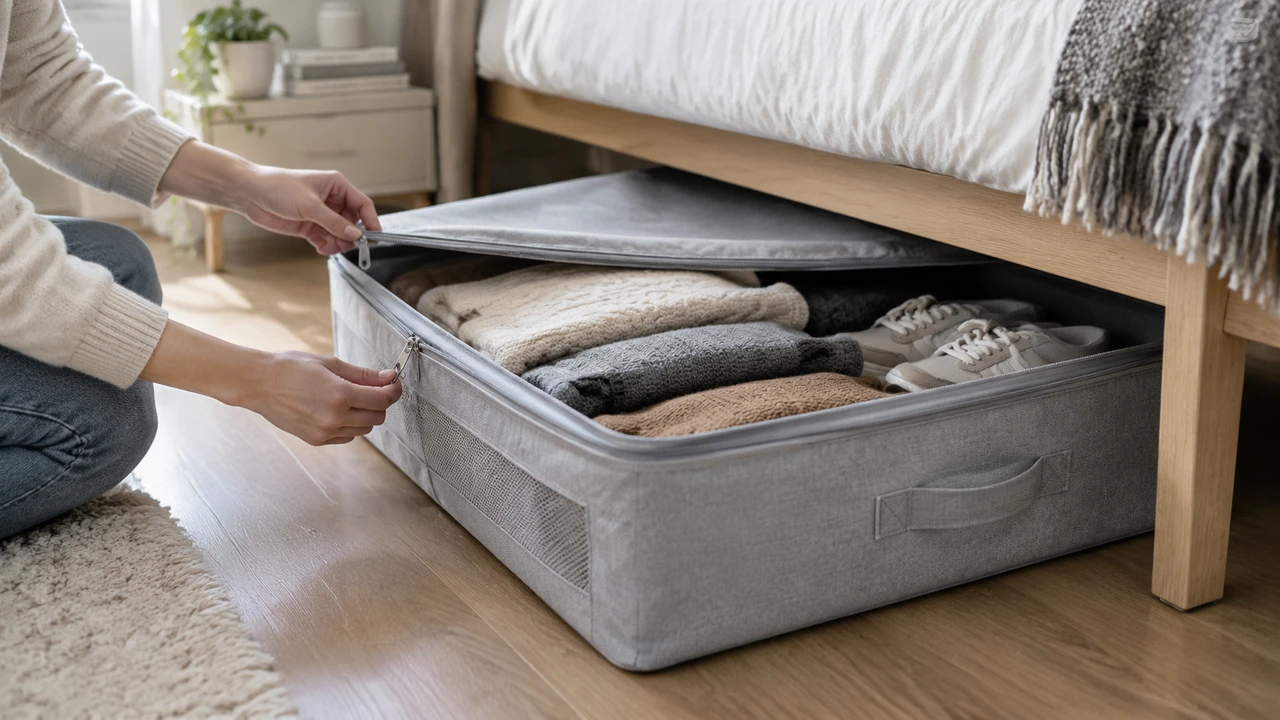
What to check on a fabric bin
- Zipper versus open top. A zipper keeps dust off light-use contents and stops items spilling when you slide the bin. A full-length lid opening is easier to load.
- Reinforced base panel. A rigid insert in the bottom stops the bin ballooning and makes it slide rather than drag.
- Handle attachment. Stitched-through handles with reinforced stitching survive pulling better than handles glued to the panel.
- Fabric weight. Heavier woven fabric holds shape and resists fraying better than thin nonwoven material; check the seams at the corners.
Match the box to the contents
The material question resolves fastest when you sort by what's going under the bed.
| Contents | Better default | Why |
|---|---|---|
| Off-season bedding and blankets | Clear plastic | Long storage, dust protection, stackable in a closet later |
| Wool sweaters and winter coats | Clear plastic, sealed | Better barrier against dust and pests over months |
| Shoes worn weekly | Zippered fabric | Frequent access, breathable, enclosed to contain grit |
| Kids' toys and soft items | Fabric | No sharp edges, lightweight, easy for small hands |
| Spare linens for a guest bed | Either | Fabric if opened often; plastic if stored for seasons |
| Documents, photos, anything damp-sensitive | Clear plastic with a sealed lid | Fabric offers limited moisture protection |
Consumer guidance on this category tends to land in the same place: choose category-specific containers rather than one oversized bin for everything. Two matched bins — one for bedding, one for shoes — work better under a small bed than a single large tote that becomes a lid you dread opening.
Care routines that extend the life of either material
- Empty and air out annually. Pull every bin out once a year, wipe or vacuum it, and let it air before reloading. This is also when you catch a cracked rim or a fraying seam.
- Store only dry items. A damp towel or a slightly humid pair of boots inside a sealed plastic tote is how musty smells start.
- Wipe plastic with a damp cloth and dry fully before the lid goes back on; avoid abrasive pads on clear sides, which scratch and cloud.
- Vacuum fabric bins with a brush attachment, and spot clean with a barely damp cloth. Let them dry completely open, never sealed and wet.
- Don't overfill. A bin that bulges can't slide out, and a rigid tote loaded past its rim puts stress on the latches.
- Keep wheels clear. Hair and carpet fibers wrap around casters and are the most common reason a rolling tote stops rolling.
A short decision path
If the contents will sit untouched for months, the clearance is at least 7 inches, and you have floor space to pull a bin forward, buy clear plastic with a latching lid and verify the interior height, not just the exterior. If the clearance is tight, the bin gets opened weekly, and the contents are soft or need to breathe, buy a zippered fabric bin with a reinforced base and check the seam stitching rather than the decorative finish. If you're storing wool or anything vulnerable to damp and pests, plastic is the safer material. If your small bedroom storage ideas depend on being able to fold everything away between seasons, fabric earns its space when empty.
Either way, measure first, then buy — and remember that listed specifications, prices, and promotions on merchant pages govern what you actually receive.